
PIPELINE: SEPSIS
sepsis can progress quickly, causing death in as little as 12 hours.
By enabling earlier and more precise detection
Fast, highly-sensitive biochip enables early detection of sepsis and upside in clinical value
SEPSIS
Bioassets for Specificity and Biochip for Sensitivity
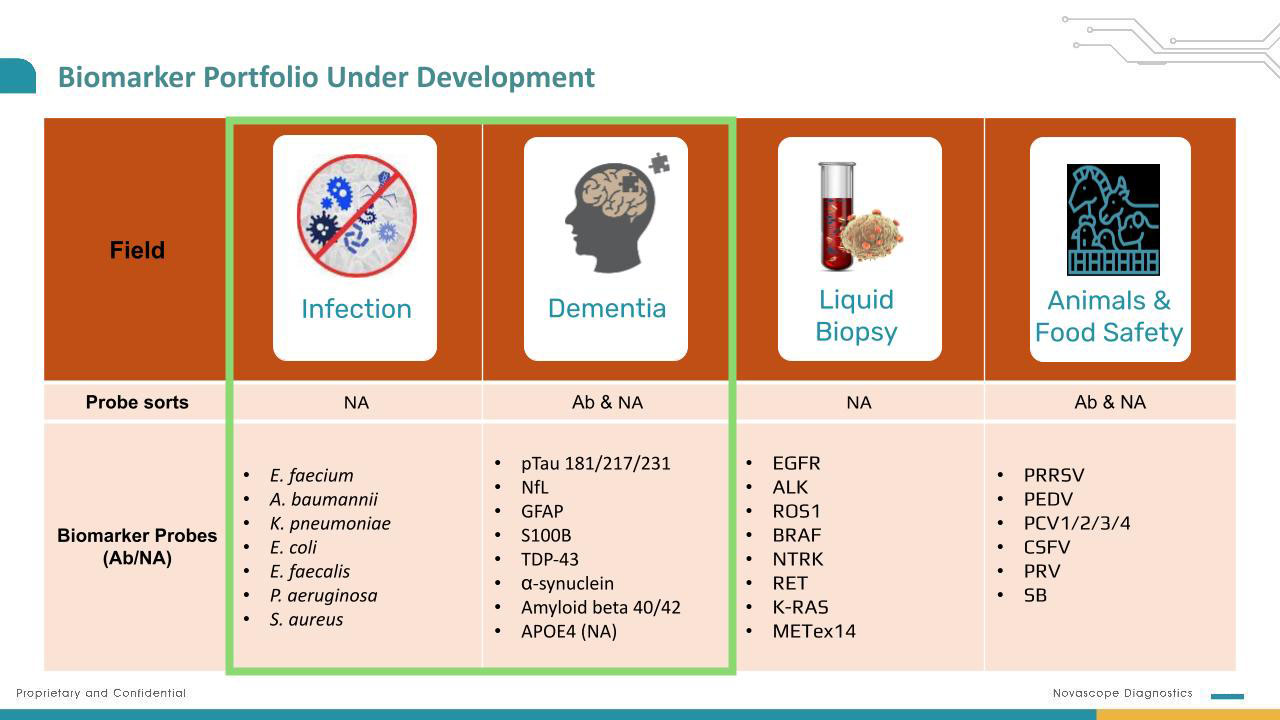
We are currently developing bioassets to address some of the most pressing medical challenges: infectious diseases and dementia. Early and precise detection can drastically improve patient outcomes, reduce healthcare costs, and guide effective treatment strategies.
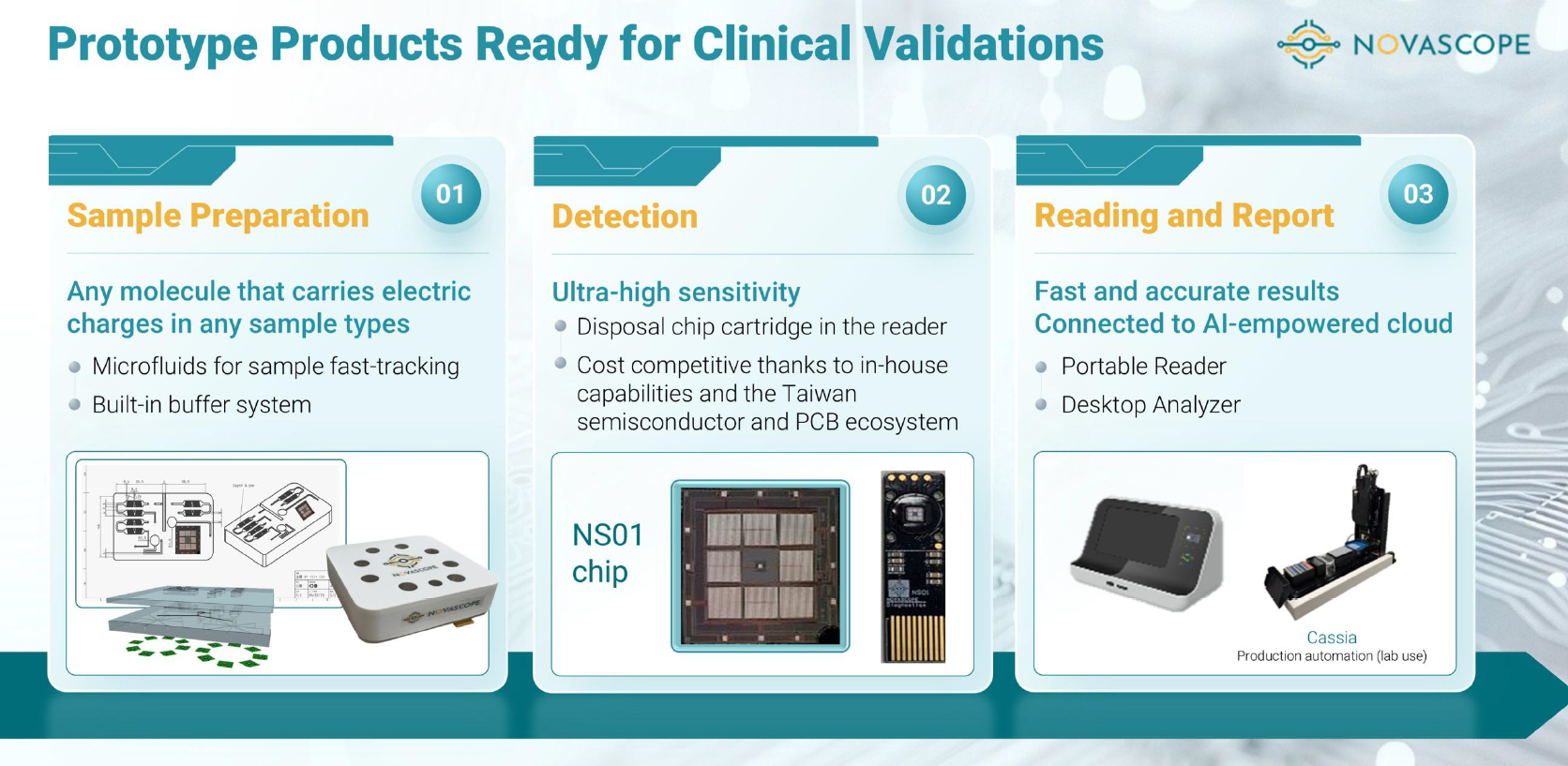
With semiconductors to provide sensitivity and bioassets to ensure specificity, our proprietary biochip platform is uniquely positioned to meet these challenges. It is highly sensitive, capable of detecting low-abundance biomarkers that traditional methods may miss. Thanks to the miniaturization of integrated circuits and our competitive cost structure, our biochip technology platform can deliver diagnostic results on compact-form devices.
We take great pride in designing and manufacturing the bioprobes that work on our highly sensitive biochips.
What sets our platform apart is its molecule-agnostic design. Whether the target biomarkers are proteins, antibodies, or other molecular signatures, our technology can adapt without the need for extensive reengineering. This flexibility allows us to rapidly expand into multiple indications, respond to emerging infectious threats, and continuously evolve alongside advancements in biomarker discovery.
By combining high sensitivity with molecular versatility, our biochips are not just diagnostic tools—they are a strategic foundation for next-generation precision medicine. We are committed to translating this technological advantage into real-world solutions that improve patient care and empower clinicians with actionable insights.
Novascope’s Biochip Helps the Patient’s Race Against Time
The Burden of Sepsis
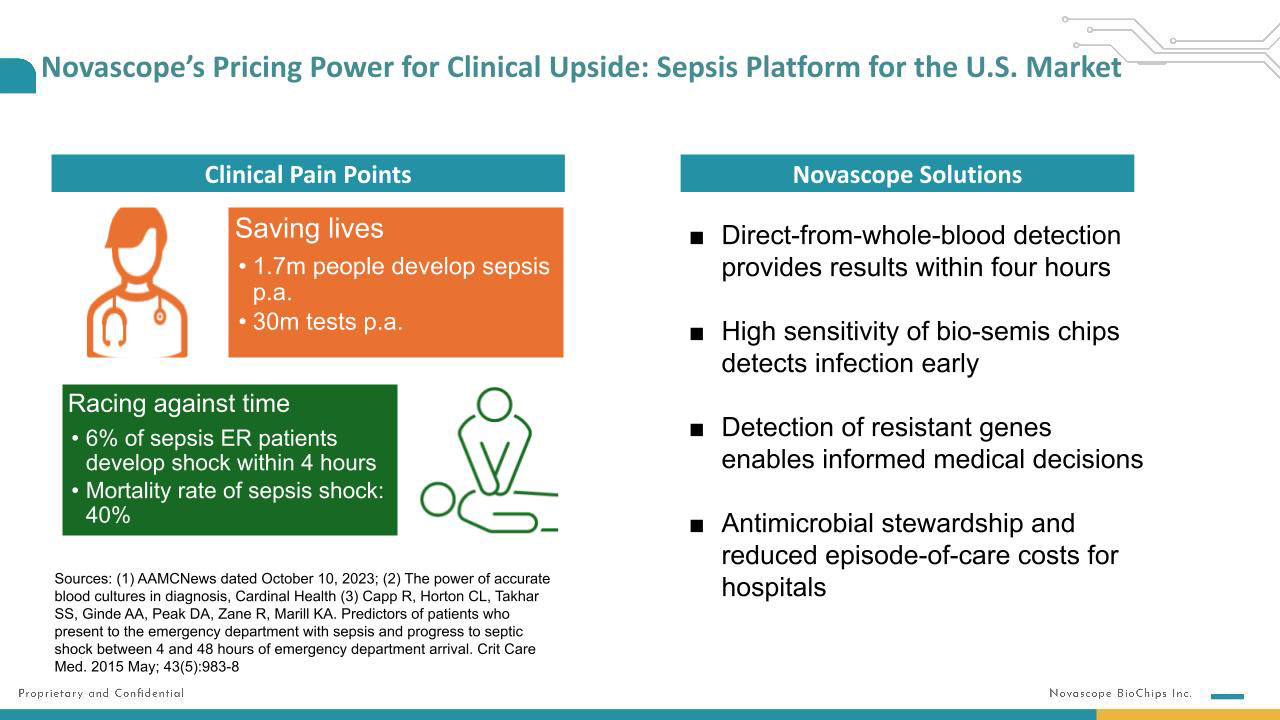
Despite advances in modern medicine, sepsis remains a critical and growing healthcare challenge because of a narrow clinical window, nonspecific and easily missed early symptoms, slow and indirect diagnostics currently available, and resistance to treatment due to misuse of antibiotics.
With sepsis, time is of the essence. For every hour of delayed treatment, the risk of death increases by between 4%-9%. Experts say that 80% of sepsis deaths could be prevented if treated in time. According to the Physician-Patient Alliance for Health & Safety, sepsis can progress quickly, causing death in as little as 12 hours.
According to the Association of American Medical Colleges (AAMC), sepsis is the third leading cause of death in U.S. hospitals. Approximately 1.7 million people develop sepsis and at least 350,000 people die from sepsis in the United States each year. As the early symptoms are nonspecific and infection may be well underway before symptoms, the number of blood culture tests ordered for detection of this disease is approximately 30 million times in the United States each year.
Sepsis mortality varies from 15% to 25% in high-income countries, whereas septic shock mortality might reach 30% to 40%*. According to the World Health Organization date in 2024, in 2020, there were 48.9 million cases and 11 million sepsis-related deaths worldwide, representing 20% of all global deaths. For every 1000 hospitalized patients, an estimated 15 patients will develop sepsis as a complication of receiving health care.
Moreover, sepsis is highly expensive to treat within an “episode of care” due to its status as a critical, multi-organ emergency requiring intensive, prolonged, and specialized medical intervention. Costs are driven by high ICU admission rates, long hospital stays, mechanical ventilation, and costly laboratory diagnostics.
In the United States, sepsis is one of the most expensive conditions treated in hospitals, accounting for over $20 billion in annual healthcare costs*. Similar high costs have been reported in Europe, with sepsis-related expenses ranging from €7500 to €27,000 per patient*.
Source: La Via L, Sangiorgio G, Stefani S, Marino A, Nunnari G, Cocuzza S, La Mantia I, Cacopardo B, Stracquadanio S, Spampinato S, Lavalle S, Maniaci A. The Global Burden of Sepsis and Septic Shock. Epidemiologia (Basel). 2024 Jul 25;5(3):456-478.
Novascope’s Biochip Meets the Unmet Demand
Fast, highly-sensitive biochip enables early detection of sepsis and upside in clinical value
As our biochip can detect pathogen traces and antimicrobial resistance genes directly from whole blood, we believe this represents a paradigm shift from the current gold standard of detection from cultured blood, which takes 24 hours or longer. By enabling earlier and more precise detection from whole blood, our sepsis panels aim to support physicians in making timely, informed treatment decisions that can materially improve patient outcomes.
Novascope’s platform enables direct-from-whole-blood pathogen detection in under one hour (excluding the time required for sample preparation).
Through disciplined engineering, clinical validation, and regulatory readiness, Novascope is redefining how pathogens are detected and how sepsis is diagnosed—bringing semiconductor precision to the front lines of infectious disease management and antimicrobial stewardship.
Request Investor Deck : ir@novascopedx.com

Novascope is a semiconductor-driven biotech company developing ultra-sensitive biochips for rapid, early disease detection and precision diagnostics